Choose music for your cinematic wedding video by starting with the feelings and spoken moments you want to remember, then asking your videographer to match that direction with music cleared for the intended use. For cinematic wedding videography in 2026, a meaningful song is a starting point—not a promise that the original recording can appear in your finished film.
TL;DR
For cinematic wedding videography, choose music around your vows and story—not just a favorite chorus.
JRMH Photos & Films serves couples seeking wedding photography and videography together.
Share music references, but confirm permission before expecting a particular recording in your wedding film.
Choose instrumental music for spoken moments; consider vocals where words will not compete.
How do you choose music for your cinematic wedding video?
Choose the feeling first, protect the voices second, and confirm music permission before settling on a song. That order keeps the soundtrack connected to your wedding rather than turning your memories into background pictures for a favorite track.
If you are choosing photography and film together, JRMH Photos & Films provides both wedding and engagement photography and videography. Start the music conversation while discussing the memories you want preserved, not after assuming a particular song is included.
1. Write your mood words
Choose 3 mood words to describe how you want the film to feel. Tender, joyful, and intimate give your videographer a clearer direction than simply asking for something cinematic.
Explain what those words mean to you. Tender might mean hearing the hesitation before a vow; joyful might mean returning to the laughter during speeches. You do not need musical vocabulary to describe the moments that matter.
Include something you do not want, too. If a grand, dramatic soundtrack feels unlike your relationship, say so before the edit takes shape.
2. Identify your voice moments
List the spoken moments you hope to hear: personal vows, a letter, a ceremony reading, or a toast. Treat this as a wish list to discuss, not a guarantee that every moment will be recorded or included.
Music should leave room for those words. A vocal line underneath a vow introduces another voice asking for your attention; an instrumental passage avoids that particular conflict, although its volume and arrangement still matter.
Ask which moments your coverage and intended film can realistically support. That answer should guide the soundtrack conversation.
3. Share your music references
Send 2 reference tracks and explain what draws you to each. Perhaps you love the warmth of the instruments in one and the gentle lift in the other.
Separate the feeling from the exact recording. Your videographer can understand a reference without promising to use it, and a different piece might support your voices more naturally.
Avoid sending an unexplained playlist. A short note about why a song matters tells your videographer more than a long list of titles.
4. Confirm usage permission
Ask who selects the music, who handles permission, and which uses that permission covers. Include your intended sharing plans in that conversation, especially if you want to post the film online.
Music licensing can involve rights in both the composition and the recording. Paying for a streaming subscription or purchasing a song does not itself give you permission to synchronize that recording with video.
Do not build your expectations around a particular recording until its intended use is confirmed. Ask how an alternative will be chosen if that recording cannot be used.
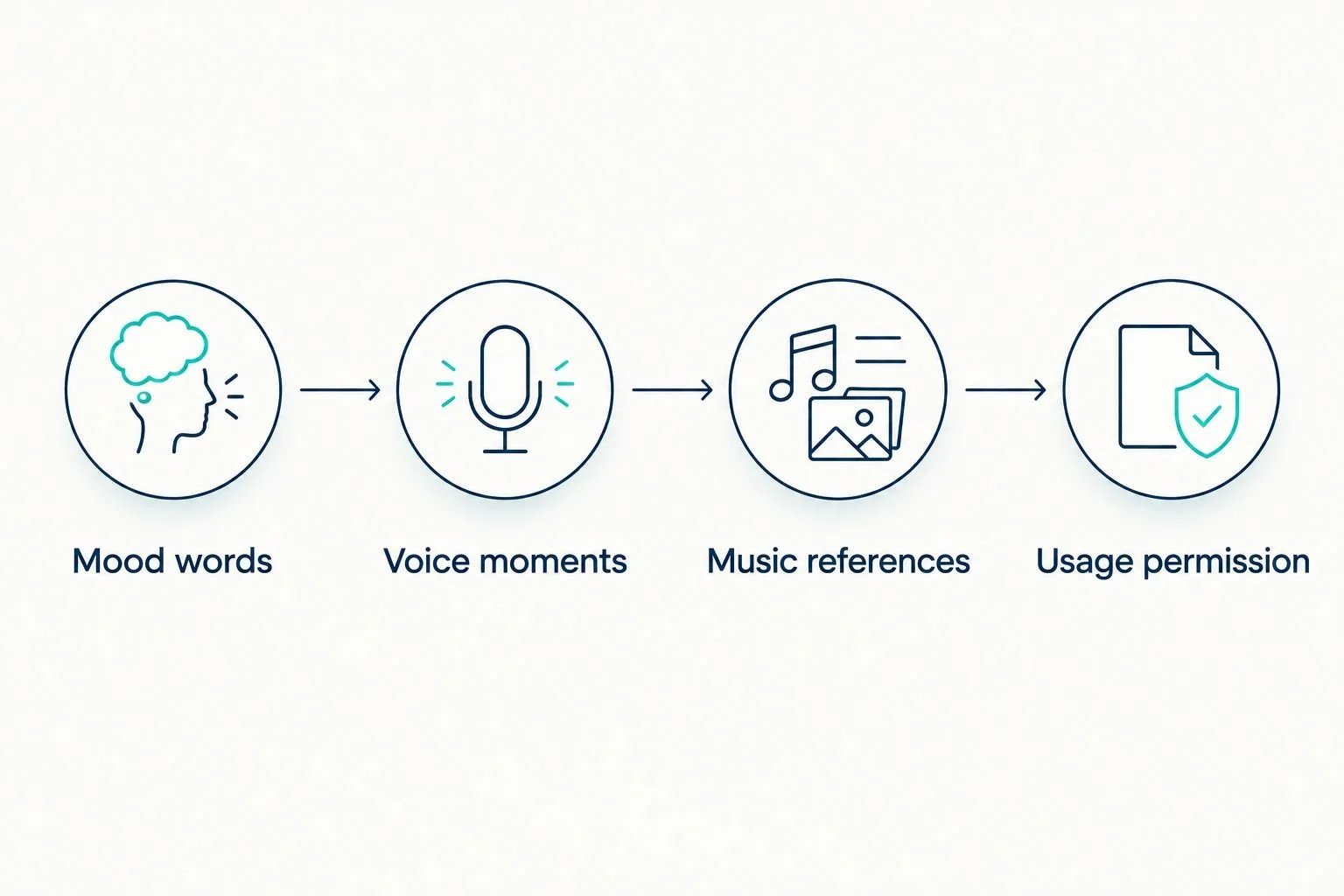
Describe the feeling before committing to a particular song.
Why this matters for your wedding memories
Your photographs hold an expression still. Your film can bring back the sound around it: the words you chose, a laugh you missed, or the pause before an answer.
For a Houston wedding in 2026, your venue and celebration plans belong in the creative brief, but they do not need to dictate a musical genre. Tell your team what the day means to you rather than asking for music that merely sounds like a wedding.
When choosing photography and videography together, share the same emotional priorities with both. You might want quiet portraits and a lively film, or a gentle feeling across both; the useful thing is making that preference clear.
Which music approach fits your wedding film?
The best soundtrack is the one that supports what you want to remember. Compare approaches by how they sit alongside your voices and images, not by how impressive a song sounds on its own.
Instrumental
Best for: Vows, letters, and spoken storytelling
Strength: Leaves lyrics out of the way of your words
Trade-off: A busy arrangement can still distract
Vocal
Best for: Image-led passages with little dialogue
Strength: Lyrics can express a feeling you recognize
Trade-off: Lyrics can compete with vows or suggest an unintended meaning
Mixed approach
Best for: Films with distinct quiet and celebratory passages
Strength: Gives different moments different musical treatment
Trade-off: Changes need careful handling to feel connected
Instrumental music: best for hearing your words
Choose instrumental music when the words themselves carry the emotion. Without a singer, there is no additional lyric for the listener to follow during a vow or speech.
Instrumental does not automatically mean quiet. Strong percussion, a prominent melody, or a sudden musical swell can still pull attention away from a soft voice. Ask to hear how the music supports dialogue in a complete sample film.
Vocal music: best for image-led passages
Consider vocal music when the film can give the song room without covering important speech. Listen to the full lyrics rather than choosing from a chorus you already love.
A beautiful melody can accompany words about separation, regret, or a relationship unlike yours. If lyrics matter to your choice, explain which lines feel personal and ask how they would fit the images.
A mixed approach: best for changing emotional chapters
Discuss a mixed approach if you want a distinction between quiet ceremony memories and the celebration afterward. Different musical treatments can support those changes without asking one song to carry every feeling.
The trade-off is continuity. Ask how the transitions will sound and whether the proposed approach suits the film you are commissioning; do not assume multiple tracks or versions are included.
Why music choices vary between wedding films
There is no single soundtrack rule that fits every couple. Your selection depends on the memories, structure, and permissions involved.
Spoken content: A film built around vows needs musical space for those words. A largely image-led passage leaves more room for lyrics.
Personal meaning: A song linked to your relationship can guide the feeling, even when a different recording is needed.
Film format: A brief highlight and a longer film ask different things of a musical arrangement. Confirm which deliverables you are discussing.
Emotional direction: A quiet ceremony and an energetic celebration need not share the same musical treatment.
Usage permission: The music must be cleared for its intended use, including the sharing plans you discuss with your videographer.
For your 2026 wedding, distinguish a preference from an agreed deliverable. Liking a particular song does not establish that it will appear in every version of your film.
What should you ask a Houston wedding photo and video team?
Start with samples that let you hear a story develop, not only short promotional clips. Listen for understandable vows, comfortable changes in volume, and music that feels connected to the couple.
Then ask how your own preferences enter the process. Useful questions include:
When should we share our music references?
Who makes the final soundtrack selection?
How are important vows and speeches considered in the edit?
Which music permissions cover our intended sharing?
What feedback and music changes does our agreement allow?
For the recording side of that conversation, read what to ask a Houston wedding videographer about sound. Music selection and sound recording are separate decisions; discussing both helps you explain what you want to hear again.
JRMH Photos & Films is best for couples seeking wedding photography and videography together. For music decisions, ask about the selection process and review relevant film samples before deciding whether the approach fits your relationship.
The benefit of considering both services together is discussing your visual and emotional priorities in the same inquiry. The limit is equally important: a combined-service description does not establish music choices, recording arrangements, or editing terms. Confirm those details in your personal quote and agreement.
How can you write a useful music brief?
A useful music brief describes your relationship without trying to direct every cut. Keep it personal enough that your videographer understands why the soundtrack matters.
For a 2026 inquiry, include your wedding date, Houston venue or planned location, interest in photography and videography together, and the memories you most want to preserve. Add your mood words, music references, and anything you do not want to hear.
Instead of writing only “romantic music,” explain whether you mean quiet and reflective or warm and celebratory. If your first-dance song matters, describe its connection to your relationship while leaving its use open to a permissions discussion.
You do not need to arrive with a finished soundtrack. Your job is to explain the meaning; the creative conversation is about how to preserve it.
Share your wedding plans
Share your wedding date and request a personal photography and videography quote.
Can we use our first-dance song in our wedding video?
Your first-dance song needs permission appropriate to its use in the finished video; its role at your reception does not settle that question. Tell your videographer why the song matters, then confirm whether the recording can be used or whether another musical approach is needed.
Keep the emotional connection in the brief even if the exact recording is not selected. It can still help explain the feeling you want to relive.
Should we choose the music before booking our videographer?
Choose a musical direction before booking, but do not assume you must select the final track first. Use complete film samples to judge whether the videographer's treatment of music and voices feels right to you.
For a 2026 booking, ask when preferences are collected and what the agreement says about soundtrack decisions. A shared understanding matters more than an early song list.
How should we listen when reviewing a wedding film?
Make 1 listening pass focused on voices rather than pictures whenever you review a sample or an edit offered under your agreement. Notice whether you can follow the words without concentrating and whether a musical change interrupts a meaningful sentence.
Then watch normally. Ask whether the soundtrack feels connected to the people on screen rather than simply asking whether you like the song.
Describe any concern through a moment: a vow becomes hard to follow, a lyric changes the meaning, or a transition feels abrupt. Specific observations give your videographer something clearer to discuss than “the music feels wrong.”
FAQ
What's the best music for cinematic wedding videography?
The best music for cinematic wedding videography supports your story without competing with important voices. Choose a feeling first, then discuss suitable tracks and usage permission with your videographer.
Can we pick every song in our wedding film?
Your agreement determines how much control you have over soundtrack selection. Ask when preferences are collected, who makes final choices, and how music changes are handled.
Is instrumental music better than songs with lyrics?
Instrumental music is better suited to passages where you want attention on vows or speeches. Vocal music can suit image-led passages, but its lyrics need to match your intended meaning.
Does buying a song let us use it in our wedding video?
Buying a song does not itself grant permission to synchronize it with a video. Ask your videographer how the necessary permissions will be handled for the intended use.
Can we post our wedding film on social media?
Confirm that the music permission covers your intended social media use before posting. Tell your videographer where you plan to share the film, including any separate excerpts.
Should our wedding highlight and longer film use identical music?
Your wedding highlight and longer film do not need identical music. Ask how soundtrack choices relate to each agreed format rather than assuming the same track will suit both.
How do we discuss photography and videography together?
Tell JRMH Photos & Films your wedding date, planned location, and interest in photography and videography together. Request a personal quote and ask how your music preferences would enter the film-planning conversation.
One last thing
Before choosing a track, name the moment you would most regret not hearing clearly. It might be your partner saying your name or a parent's voice during a toast.
Put that moment at the top of your brief. Choose music that makes room for the memory—not music that asks the memory to make room for it.