Ask a Houston wedding videographer how they will record your vows and speeches, what backup sound recording they use, and which spoken moments will appear in your finished film. For your 2026 wedding, separate the question of capturing sound from the question of receiving it: recording the ceremony does not automatically mean your chosen film includes the complete ceremony audio.
TL;DR
Ask your Houston wedding videographer about vows, speeches, backup recordings, and the spoken moments included in your wedding film.
Request wedding videography samples with real voices, not only music.
Confirm sound responsibilities when booking wedding photography and videography together.
JRMH Photos & Films offers wedding photography and videography for couples who want both services.
What should you ask a Houston wedding videographer about sound?
Ask how your words will be recorded, protected, and included in the films you receive. Those are separate decisions. A beautiful preview with a music track does not answer any of them.
If you are considering JRMH Photos & Films, bring these questions to your wedding photography and videography conversation. Start with the moments you want to relive, rather than asking for a list of equipment.
Ask how your vows will be recorded
Tell the videographer whether you expect personal vows, traditional vows, or a private exchange. Ask how they would capture each speaker clearly and what they need from your officiant or venue.
Useful questions include:
How will you record each of us during the ceremony?
Will you also record the officiant?
If we exchange private vows, how should we tell you where and when?
What happens if our ceremony location changes?
Ask where any small microphone would sit and how it would be attached. This lets you discuss comfort and clothing without turning the conversation into a technical lesson.
Ask what happens if a recording fails
Ask whether there will be a separate backup recording of your vows and speeches. Then ask what that backup captures. A second camera angle is not the same thing as a second usable sound recording.
You do not need to know recording terminology to understand the answer. Ask the videographer to explain, in everyday language, how your voices remain covered if a microphone stops working or a connection to the sound system fails.
Ask which spoken moments you will receive
Name the moments that matter: the complete vows, your parent's toast, a reading, or the words you share before the ceremony. Ask which of those appear in each proposed film.
A short film can use selected lines to tell your story. That is different from receiving a recording of an entire speech. Confirm the finished films, not just the moments the team plans to record.
Ask to hear an example
Request a wedding film that includes actual vows or speeches. Listen for whether you can understand the words comfortably, whether the music overwhelms them, and whether changes between speakers feel distracting.
For a 2026 booking, ask whether the sample reflects the kind of film being proposed for your wedding. A sample helps you understand an approach; your written agreement defines what you receive.
Why this matters: your voices are part of the memory
Photographs preserve expressions, gestures, and the people gathered around you. Film can also preserve the way your partner says your name, the pause before a promise, and the laughter during a toast. Those details deserve a place in your buying conversation.
When you choose wedding photography and videography together, ask how the team will make room for both. Portraits matter, but so does arriving before a speech starts and allowing time to prepare for private vows.
You do not need to supervise the recording process on your wedding day. You need a clear conversation beforehand about the moments you value and who is responsible for capturing them. That gives you a practical basis for comparing proposals beyond how romantic the sample films look.
Which kinds of wedding sound should you discuss?
Different recordings serve different purposes. Ask how the proposed approach covers voices, room sound, and music rather than assuming one recording source handles everything.
A microphone close to the speaker
Best for: Vows and spoken promises
What it contributes: A recording focused on the person's voice
Limitation to discuss: Placement, clothing contact, and coverage of other speakers need attention
A recording from the venue or DJ sound system
Best for: Amplified speeches and ceremony voices
What it contributes: Access to sound passing through that system
Limitation to discuss: It depends on what the system receives and whether a usable connection is available
A recording of the surrounding space
Best for: Applause, laughter, and the atmosphere
What it contributes: The reactions that help a moment feel alive
Limitation to discuss: Distance and background noise can make individual words harder to hear
Music added during editing
Best for: Supporting the film's mood
What it contributes: A musical thread through selected scenes
Limitation to discuss: Music does not replace a recording of your vows or speeches
These approaches can work together. The question is not which single source is best in every situation, but how the videographer plans to cover your particular moments.
Do not treat access to the DJ's microphone as the entire sound plan. Ask what will happen when someone speaks away from that microphone, changes position, or begins before the team expects them to.
What should you ask about ceremony vows?
Start with the ceremony arrangement. Tell your videographer whether you will stand together, face your guests, move between locations, or share vows somewhere separate from the ceremony. Ask how those choices affect the recording plan.
For an outdoor ceremony, ask how the team handles wind and surrounding noise. For an indoor ceremony, ask how they work with the venue's sound system and whether a rehearsal or advance conversation with the officiant would help.
Do not ask for a promise that every setting will sound identical. Ask how the videographer prepares for the setting you have chosen and what they need you to communicate before the day.
If private vows are important, discuss privacy as well as sound. Ask who needs to be nearby, how the moment will be recorded, and whether you want the words included in a film shared with other people. Your decision to record something and your decision to share it are different.
What should you ask about reception speeches?
Ask who will coordinate with the DJ, emcee, or venue before speeches begin. The answer should make clear how the videographer will know when the first speaker is about to start and how sound will be captured.
Then discuss the speaking arrangement. Will everyone use the same microphone? Will speakers stay in one place? Will a loved one give a surprise toast? These are details to share, not problems you need to solve yourself.
Tell the team if a particular speech has special meaning. That lets you ask directly whether it will be recorded and whether the complete speech is part of the proposed delivery.
For your 2026 wedding film, distinguish between a few memorable lines in a highlight and a separate recording of the full speeches. Neither format is automatically the right choice for every couple. Choose based on how you want to return to those words later.
Why wedding sound plans vary
Your sound plan should respond to your wedding, not just follow a generic checklist. Discuss these factors before agreeing to the scope:
Ceremony setting: An outdoor space brings different sound considerations from an enclosed room.
Speaker placement: Voices need attention wherever the couple, officiant, readers, and toast-givers will stand.
Sound-system access: Ask whether the videographer can coordinate with the person operating the venue or DJ system.
Changes during the day: A moved ceremony or an unannounced speech needs a clear way to alert the team.
Your film choices: Selected spoken lines and complete ceremony or speech recordings are different editing requests.
Your privacy preferences: Personal vows need a conversation about both recording and sharing.
Use this list to explain your plans. You do not need to choose microphones or direct the team; you need to know that your priorities have been understood.
How do you compare sound in sample wedding films?
Use 3 listening checks when reviewing a sample: Vows, Speeches, and Music balance. Listen somewhere quiet enough to hear the words, and do not judge sound only from a short social preview.
Vows: Listen to each person's voice. Can you follow the promises without guessing? Notice whether clothing noise or surrounding sound distracts from the words.
Speeches: Listen for changes between speakers. Ask whether the sample contains complete speeches or selected excerpts, so you know what it demonstrates.
Music balance: Listen when music and a voice play together. The spoken words should remain easy to understand, rather than feeling buried beneath the soundtrack.
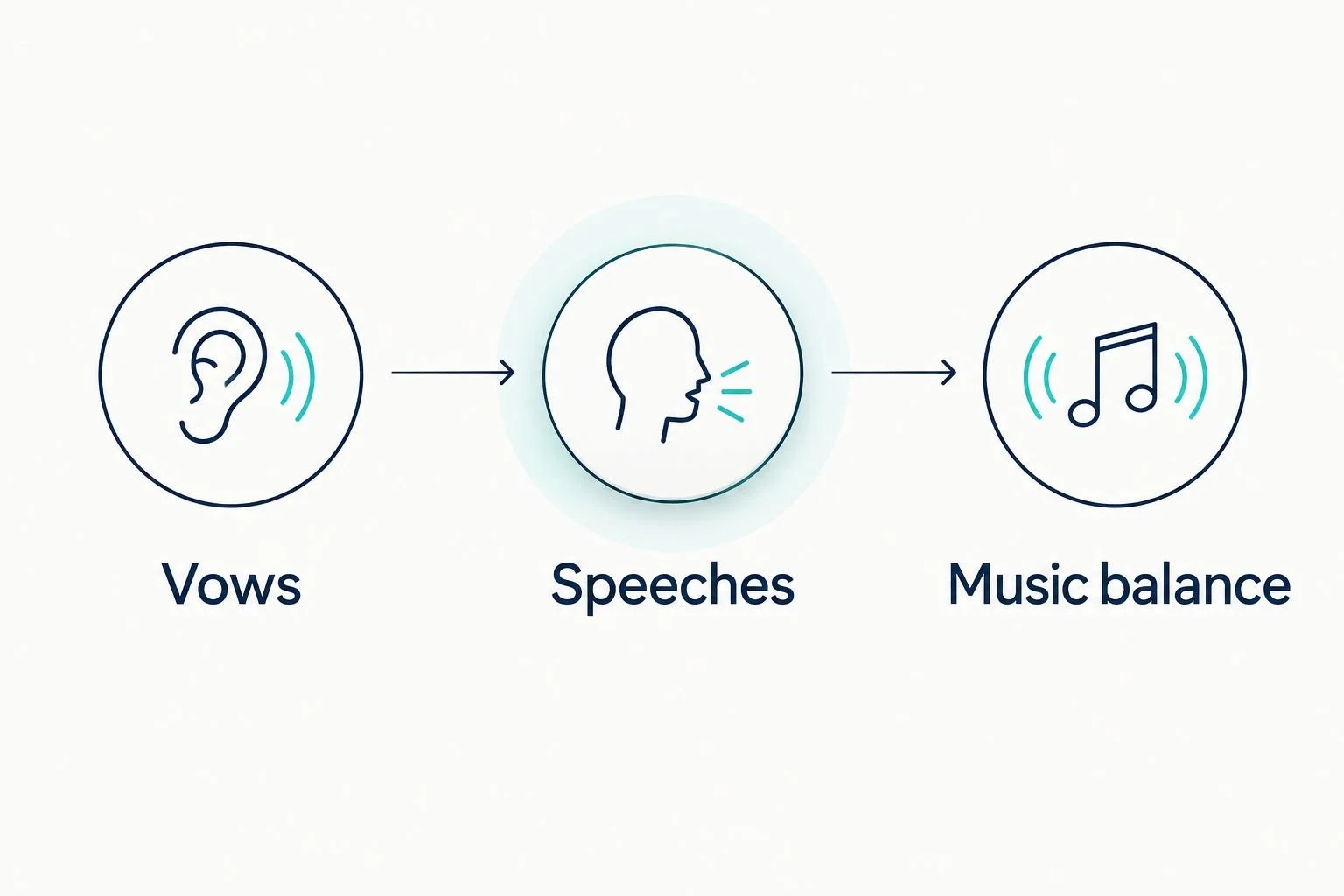
Listen to spoken moments, not only the music behind them.
After listening, describe what you liked in personal terms. You might want voices to feel intimate, laughter to remain audible, or a meaningful pause to stay in the edit. That is more useful than asking for a film that simply sounds professional.
If a sample does not include spoken words, request another example. It can still show visual storytelling, but it does not demonstrate how vows or speeches are handled.
What should the written agreement say about sound?
Ask for a clear description of the films you will receive and how spoken moments fit into them. The agreement should let you distinguish between recording an event and delivering that event in full.
Before signing, confirm these 4 questions in writing:
Which ceremony and reception moments are within the agreed coverage?
Which delivered films will include vows or speech audio?
Are complete ceremony or speech recordings included or separately discussed?
What are the terms if a recording problem affects a promised film?
Read the answers alongside the overall photography and videography scope. If a conversation changes what you expect to receive, ask for the written description to change too.
A clear agreement does not remove every possible recording difficulty. It does remove ambiguity about what you have requested and what the team has agreed to provide.
Is one team better for wedding photography and videography?
One team is best for couples who want to discuss wedding photography and videography together. The benefit is a shared planning conversation; the point to confirm is how the team divides responsibilities when photographs and spoken moments happen at the same time.
JRMH Photos & Films is best for couples seeking wedding photography and videography together. Ask about sound as part of that combined-service conversation, rather than assuming that every film format or recording arrangement is included.
Share your 2026 wedding date, venue, and the words you most want to preserve when requesting a personal quote. Those details keep the conversation centered on your memories and the coverage you actually want.
Share your wedding date
Tell JRMH Photos & Films about your vows, speeches, and plans, and request a personal quote.
Can you keep the full vows as well as a short film?
Ask whether complete vows can be delivered alongside the proposed short film. A film built around selected moments does not itself confirm that you will receive every spoken word.
If preserving the full exchange matters, make it a specific request before booking. Ask how it would be delivered and have the agreed scope recorded in writing.
Do you need to choose music before booking?
Ask how music selection works before booking, but focus first on whether the film will preserve the voices you care about. Also ask how the team handles permission to use music in the delivered film and any version intended for online sharing.
Describe the feeling you want rather than assuming a particular song can be used. Gentle, joyful, or reflective gives the team a useful starting point.
FAQ
What should I ask a Houston wedding videographer about sound?
Ask how vows and speeches will be recorded, what backup recording is planned, and which spoken moments will be included in your delivered films. Request a sample with real voices so you can hear the approach.
Does a wedding highlight film include our full vows?
A wedding highlight film does not automatically include your full vows. Ask whether it uses selected lines and whether a complete recording is part of the agreed delivery.
Can our videographer record sound from the DJ?
Ask your videographer whether they can coordinate a recording from the DJ's sound system. Also ask what separate recording is planned if that connection is unavailable or does not capture a speaker.
What should we ask about an outdoor ceremony?
Ask how the videographer plans to handle wind, surrounding noise, and the positions of everyone speaking. Share any changes to the ceremony location before the day.
Can we record private vows without putting them in our shared film?
Ask to agree separately on recording private vows and including them in a shared film. Put your sharing preferences in writing so the intended use is clear.
What should we confirm when booking photography and videography together?
Confirm who is responsible for recording spoken moments and how the team coordinates during vows and speeches. Also confirm which photographs and films are part of the agreed scope.
What should we include when requesting a quote for our 2026 wedding?
Share your 2026 wedding date, venue, ceremony plans, and the spoken moments you want to preserve. Explain whether you want selected lines in a short film, complete recordings, or both.
One last thing
Choose a sample you want to listen to again, not just watch again. Close your eyes during the vows or a speech and notice whether the words still hold your attention. It is a simple way to focus on the memory rather than the scenery.
Before your 2026 wedding, tell your team which voice matters especially to you: your partner's, a parent's, or someone giving a reading. Naming that moment makes your request personal and gives your buying conversation a clear purpose.