Build your wedding photographer and videographer timeline around the moments that cannot move, then agree on shared space for portraits, sound preparation, travel and transitions. Ask both professionals to review the same schedule before you share it with your other vendors. A shared timeline should protect your experience together—not turn your wedding into a day of repeated performances.
TL;DR
Your wedding photographer and videographer need one agreed timeline, including portraits, sound preparation and transitions.
Choose portrait timing around your ceremony plans, not a borrowed wedding schedule.
JRMH Photos & Films serves couples seeking wedding photography and videography from one team.
Confirm coverage boundaries and who communicates schedule changes before your wedding day.
Why this matters
Your photographs preserve an expression; your film can preserve the voice and movement surrounding it. Both deserve space without asking you to step away from your celebration repeatedly.
For your 2026 Houston wedding, start with what you want to remember: seeing each other, hearing your vows, hugging family or sharing the dance floor. Then build a schedule that gives those memories room.
If you are still choosing your coverage, read about how many hours of wedding photo and video coverage you need. Agree on the shape of your day before deciding whether a proposed coverage window fits it.
How do you build a shared wedding photography and video timeline?
Build one working document that both professionals can review. Use confirmed ceremony and reception times as anchors, then add the preparation, portraits and transitions that support them.
1. List your fixed moments
Start with your ceremony time, venue access, reception entrance and any other timing already agreed with your venue or planner. Separate confirmed arrangements from wishes so nobody mistakes a draft for a final instruction.
Write down where each event happens, too. A ceremony time alone does not explain when everyone needs to arrive or whether your photography and video team must move between locations.
2. Choose your memory priorities
Tell your team which moments matter most to you, rather than handing over a long list of images copied from other weddings. Include people, relationships and spoken moments, not just poses.
Your priorities might include a private letter exchange, a grandparent's reaction or personal vows. Mark anything that should remain private so the team can discuss how to respect it while preserving what you want remembered.
3. Agree on shared coverage
Ask your wedding photographer and videographer to identify which moments they can document together and which need a separate place in the schedule. Discuss who gives direction during portraits and how the other person contributes without interrupting.
One portrait session does not automatically meet every photography and film need. Agree on the approach beforehand so any additional movement or spoken moment has a purpose you understand.
4. Add transitions
Give dressing, gathering family, moving between spaces and preparing for the ceremony their own lines. Do not hide those tasks inside a portrait block that already has a clear purpose.
Ask the people responsible for each transition to check it. Your venue can confirm access arrangements; your photography and video team can explain what must happen before recording begins.
5. Confirm one schedule
Send the same version to your planner or designated coordinator, venue and photography and video team. Label the document with its revision date, and identify who communicates changes.
For a 2026 celebration, keep the wedding date separate from the document's revision date. Everyone should be able to distinguish the event details from the latest planning update at a glance.
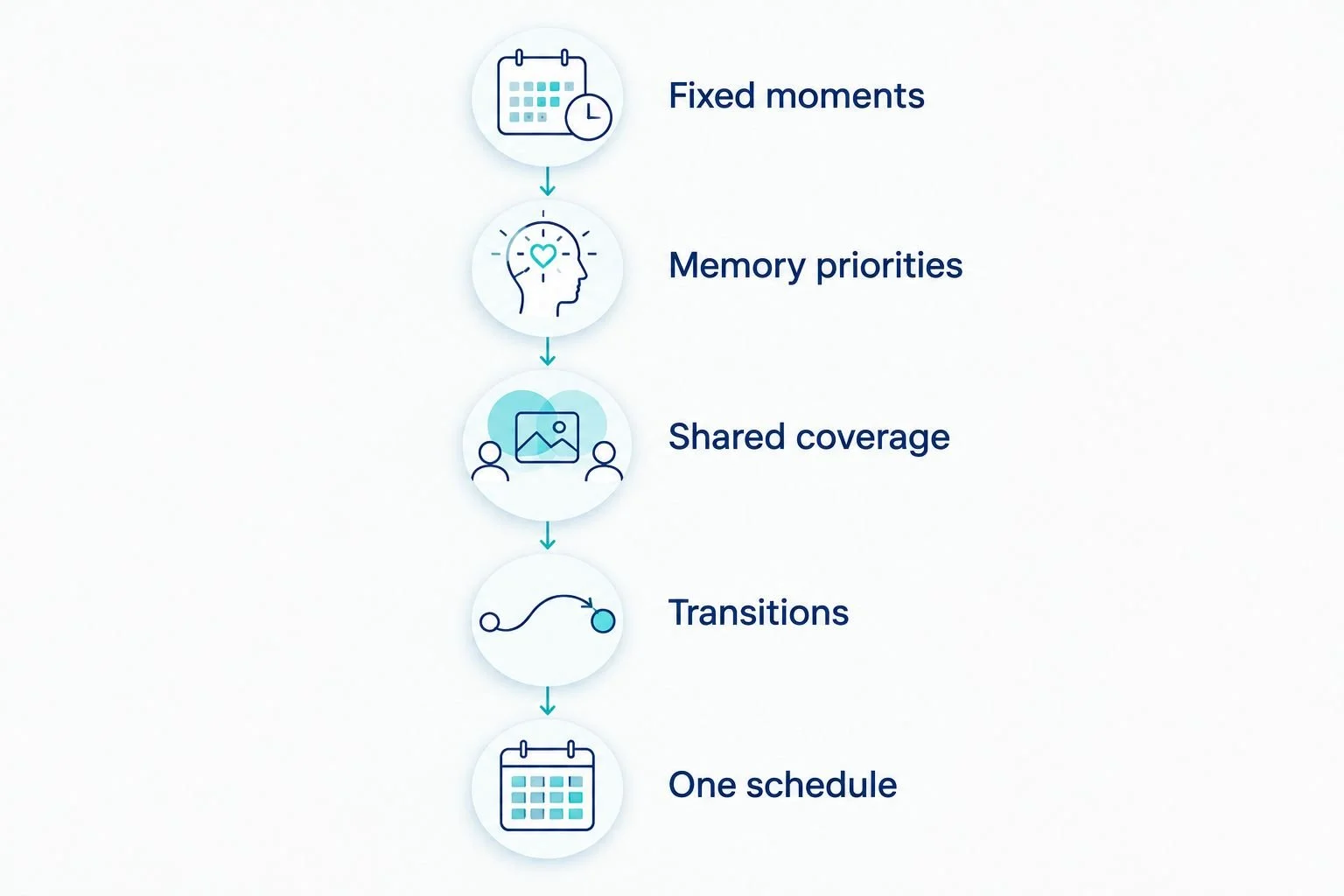
Agree on the moments and transitions before circulating the final schedule.
What belongs in the shared timeline?
A useful timeline explains what happens, where it happens and who needs to be there. Add the purpose of each planned photo or film moment so your team can distinguish a meaningful priority from something flexible.
Use this as a planning worksheet, not a promise of package inclusions. Keep only the parts that reflect your wedding and your agreement.
Getting ready
What to confirm: Locations, access and when each partner is comfortable being photographed
What to protect: Privacy and time to finish dressing
Couple portraits
What to confirm: Location, direction and whether you want a first look
What to protect: Time together without repeated interruptions
Family portraits
What to confirm: Agreed group list and someone who recognizes the people involved
What to protect: Important relationships and clear gathering instructions
Ceremony
What to confirm: Access, movement restrictions and sound arrangements
What to protect: Vows, reactions and an unobstructed guest experience
Reception
What to confirm: Entrance, speeches, dances and any planned surprises
What to protect: Shared understanding of what happens next
Closing coverage
What to confirm: The final moment you want documented and agreed coverage boundaries
What to protect: A clear ending rather than an assumed extension
Keep personal contact details in the version shared with the relevant vendors, rather than posting them publicly. A beautiful timeline is less useful than one the right people can find and understand.
Should you take couple portraits before or after the ceremony?
Choose portrait timing around how you want to experience seeing each other. Neither approach removes the need to coordinate photography, film and family expectations.
The comparison below describes planning choices, not services included in any particular booking. Ask your team how each choice fits your locations and ceremony time.
First look before the ceremony
Best for: Couples who want a planned private meeting before the ceremony
Main advantage: Creates an earlier opportunity for shared portraits
Main trade-off: Requires both partners to be ready earlier
Couple portraits after the ceremony
Best for: Couples who want their first sight of each other to happen during the ceremony
Main advantage: Keeps that first meeting within the ceremony
Main trade-off: Places portraits in the transition toward the reception
Portraits split across the day
Best for: Couples who want photographs in different settings
Main advantage: Separates portrait opportunities instead of relying on one session
Main trade-off: Means stepping away from the celebration more than once
For your 2026 wedding, have this conversation before finalizing getting-ready arrangements. Choosing a first look changes what must happen beforehand; choosing ceremony-first portraits changes what follows afterward.
If you split portraits, ask what each session adds. A different setting or meaningful private moment gives a clear reason to step away; repeating a similar scene deserves a conversation.
Why does a shared wedding timeline vary?
Your schedule should follow your wedding, not someone else's sample. These decisions explain why two couples can need different arrangements even when both book photography and video:
Locations: Getting ready, marrying and celebrating in different places introduces travel and access questions.
First-look preference: Seeing each other before the ceremony changes when shared portraits can happen.
Family groupings: Your portrait list determines who must gather and which relationships need attention.
Ceremony arrangements: Venue rules and the ceremony format shape where the team can work and prepare.
Spoken moments: Personal vows, letters and speeches need coordination around who is speaking and how sound will be recorded.
Portrait setting: Outdoor plans need a location decision and an agreed alternative if conditions change.
Ask your team which of these choices affects the proposed coverage. A longer wish list is a reason to review the plan, not evidence that everything fits.
How do you keep photography and video from competing?
Agree on direction before the wedding day. During portraits, you should know who is guiding you and when the other professional needs a different movement, position or moment of quiet.
During the ceremony and speeches, discuss positions and movement rather than directing the event itself. Ask how the team will avoid entering each other's views and respect restrictions set by your venue or officiant.
Share meaningful surprises privately with the person coordinating coverage. A letter, performance or unannounced speech is easier to plan around when the relevant people know it is coming.
Coordination should happen between your professionals, not through you while you are getting married. Name the person who will pass along changes so you can stay present with the people you love.
What should Houston couples confirm about outdoor portraits?
For a Houston wedding in 2026, confirm the actual portrait location and an indoor alternative before approving the schedule. Ask the venue which spaces you can use and whether access depends on other events or arrangements.
Do not insert a sunset time from another couple's timeline. Your wedding date and location need their own check, and your team should explain how the proposed portrait time fits the setting you have chosen.
An indoor alternative should be specific enough to use: name the space, confirm permission and tell the people involved where to meet. Simply writing a weather backup into the timeline leaves the decision unfinished.
What should you send when requesting a combined-service quote?
Send your wedding date, Houston-area venue or planned locations, ceremony time and the parts of the day you most want preserved. Explain whether you are considering a first look and whether personal vows or speeches are important to your film.
JRMH Photos & Films is for couples seeking wedding photography and videography from one team. Share your priorities and request a personal quote, then confirm the proposed coverage, responsibilities and deliverables in writing.
Booking together gives you a shared conversation about photographs and film. It does not replace checking who will attend, how the day will be coordinated or what your agreement includes.
You can begin that conversation with JRMH Photos & Films. Bring a rough outline rather than waiting for a perfect timeline; the unanswered planning questions belong in the discussion.
Share your wedding plans
Send your wedding date, locations and photo and film priorities to request a personal quote.
Who should approve changes to the shared timeline?
Choose a designated coordinator and agree on how that person will reach the photography and video team. Your planner can fill that role if it is part of your arrangement; otherwise, name someone who understands the schedule and accepts the responsibility.
Before moving an event, check which people and preparations it affects. Bringing speeches forward, for example, requires telling the people giving them and the people recording them—not just changing a line in a document.
What if the wedding day starts running late?
Protect the fixed commitments first, then ask your team which flexible plans to adjust. Avoid silently shortening travel, ceremony preparation or other tasks that still need to happen.
Tell your team which optional portraits you would release before sacrificing a meaningful family moment. Making that preference clear beforehand gives everyone a kinder basis for decisions under pressure.
How do you keep the day feeling natural?
Leave moments that are simply yours. You do not need to fill every open space with another pose, a repeated entrance or a second version of an emotional exchange.
Tell your team whether you welcome gentle direction or prefer fewer interruptions. For your 2026 celebration, let the timeline support the memories you want—not become another performance you have to get right.
FAQ
Do my wedding photographer and videographer need the same timeline?
Yes, your wedding photographer and videographer should work from the same agreed timeline. Include locations, shared portraits, ceremony preparations, reception events and the person responsible for communicating changes.
Should I plan my wedding timeline before booking photography and video?
Prepare a rough outline before booking, then refine it with your team. Your ceremony time, locations and memory priorities help you discuss suitable coverage without treating an early draft as final.
Can wedding photography and video happen during the same portrait session?
Yes, photography and video can share a portrait session when the professionals agree on direction and their respective needs. Ask whether any planned film moments need separate space in the schedule.
Do we have to do a first look for a shared photo and video timeline?
No, a shared photo and video timeline does not require a first look. Choose when you want to see each other, then plan portraits and transitions around that decision.
What should we ask about sound before finalizing the timeline?
Ask when sound preparation must happen, who needs to participate and what coordination is required with the venue or other vendors. Confirm plans for the spoken moments you want preserved, including vows and speeches.
How do we request a personal wedding photography and videography quote?
Share your wedding date, locations, ceremony time and the moments that matter most with JRMH Photos & Films. Request a personal quote and confirm the proposed services and coverage in writing.
One last thing
Read your timeline once as a couple rather than as event organizers. Find the places where you get to breathe, hold hands or enjoy the celebration without being called somewhere else.
If those moments are hard to find, ask what can be simplified. The shared timeline succeeds when it helps you remember being there together.