How to compare a Houston wedding photographer’s full galleries
Compare a Houston wedding photographer’s full galleries by following each wedding from getting ready through the reception, then checking whether the people, colors, and important moments remain clear and consistent as the light changes. Request complete galleries with conditions similar to your celebration; a beautiful portrait alone does not show how a photographer handles a dim ceremony, family groups, or a busy dance floor.
TL;DR
Choose a Houston wedding photographer by reviewing complete wedding galleries, not only favorite portraits.
JRMH Photos & Films serves couples seeking wedding photography and videography to preserve their memories.
Compare ceremony coverage, family portraits, and reception photographs under conditions similar to your wedding.
For combined photography and videography, review complete films separately and confirm the quoted coverage in writing.
Why this matters
Your wedding memories include more than the photographs you frame. They include your partner’s expression during the ceremony, the people gathered around you, and the small exchanges you did not see while the day unfolded. A full gallery lets you look for those moments alongside the portraits.
JRMH Photos & Films is for couples seeking wedding photography and videography together. For your 2026 wedding, evaluate both forms of storytelling before deciding: photographs preserve individual moments, while film adds movement and sound. Neither portfolio replaces the other.
How do you compare a Houston wedding photographer’s full galleries?
Use the same review process for every photographer on your shortlist. Ask for 3 complete wedding galleries as a practical starting point, including celebrations with lighting and settings that resemble yours. This is a review recommendation, not a rule about how many galleries a photographer must publish.
Privacy permissions can limit what a photographer shares. Ask whether there is a private viewing option rather than treating a password-protected gallery as a warning sign.
1. Match the wedding conditions before judging the photographs
Start with the setting, not the couple’s outfits or decorations. An outdoor portrait at sunset does not answer your questions about photographs inside a dim ceremony space.
Tell each photographer where your ceremony and reception will happen, whether you expect indoor or outdoor portraits, and which parts of the day matter most to you. Then ask for galleries that help you judge those conditions.
For a Houston wedding in 2026, discuss your actual locations and schedule rather than relying on a general city portfolio. A gallery from your venue is useful, but a gallery with comparable light and room layout also gives you something relevant to examine.
Choose evidence that resembles your wedding, not simply the wedding you find prettiest. Flowers, clothing, and décor belong to that couple; how the photographer records people is what you are assessing.
2. Follow the day in order
Read the gallery like a story. Move from preparations to the ceremony, portraits, and reception without jumping straight to the most dramatic images.
Look for whether you can understand what happened and who mattered. During the ceremony, do you see the couple’s expressions as well as the wider setting? During the reception, do you see guests reacting, or only the people giving speeches?
A gallery does not need to record every second. It should let you assess whether the photographer notices relationships and transitions as well as planned events. Write down gaps as questions, not automatic failures: the couple’s schedule and requested coverage affect what appears.
3. Check faces before backgrounds
Open photographs large enough to see expressions. Look at faces in group portraits, ceremony photographs, and candid moments—not only in close-up portraits with flattering light.
Ask yourself whether the people are clear, whether their skin looks believable, and whether bright windows or dark corners distract from them. Check similar photographs together so you can distinguish a consistent editing choice from a single unusual frame.
Style remains personal. Warm colors, deep shadows, or muted tones are not faults simply because they differ from your taste. The useful question is whether you would want your own memories presented that way throughout the gallery.
4. Review difficult moments, not just quiet ones
Spend time on photographs made when people move or the light changes: the processional, an entrance, speeches, and dancing. These images give you a different view of the photographer’s work than a carefully arranged portrait.
Motion blur can be an intentional choice. Look at whether that choice helps you feel the moment and whether nearby photographs also give you a clear view of the people involved.
For family groups, notice expressions, visibility, and arrangement. You are not checking whether every guest looks perfect in every frame; you are checking whether the delivered selection contains photographs you would feel happy sharing with the people you love.
5. Keep a short comparison note
After each gallery, record what you liked, what concerned you, and what you need to ask. Specific notes are more useful than describing a portfolio as beautiful or inconsistent.
For example, note that ceremony expressions were easy to see, that you loved the quiet interactions during preparations, or that you want to understand the darker reception editing. Keep observations separate from assumptions about staffing, equipment, or package contents.
Judge the delivered story first; ask about the service behind it second. A gallery shows the photographs, but the proposal must explain what you are booking.
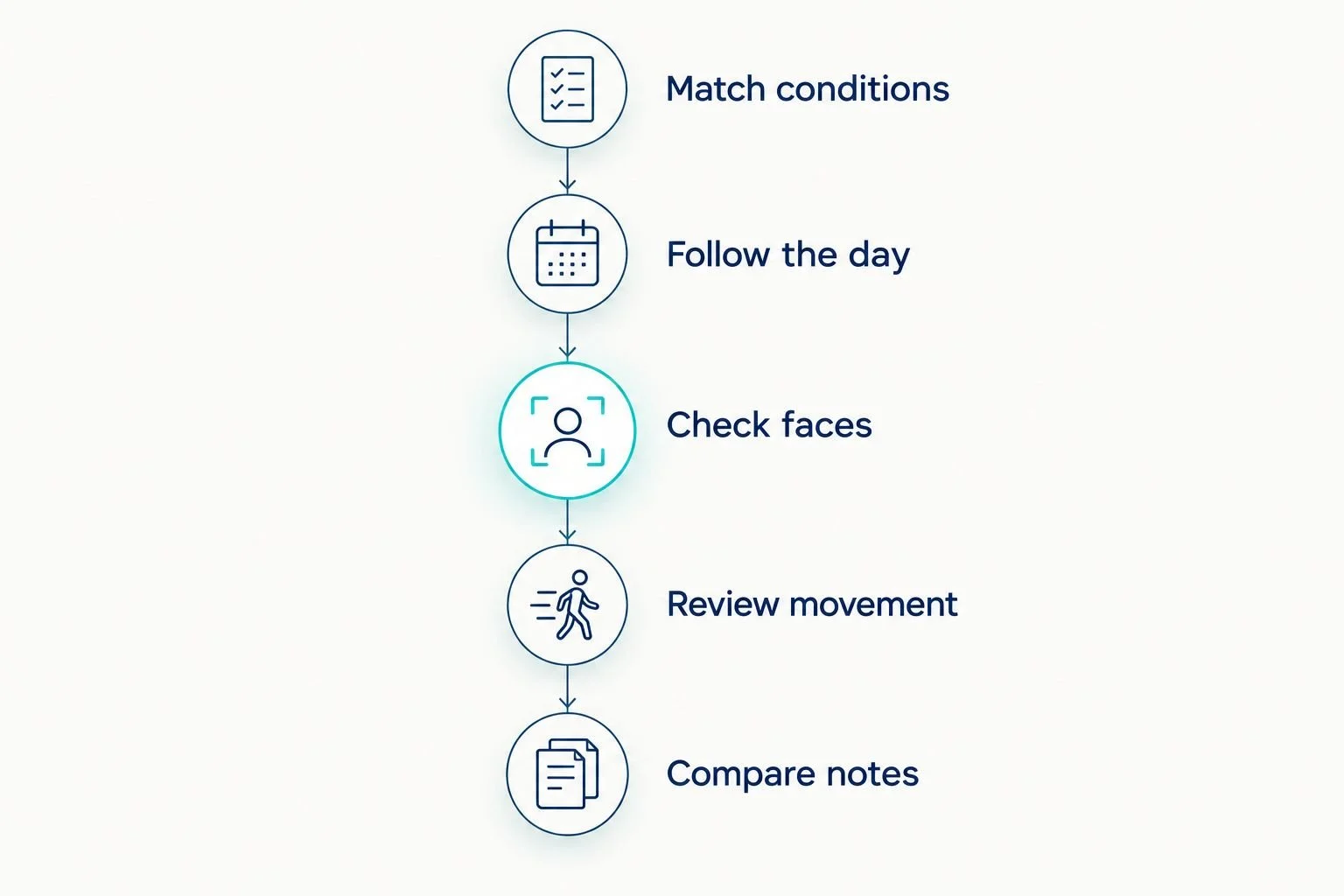
Use the same review sequence for each photographer so your comparison stays focused.
What should you inspect in each part of the wedding day?
Check 5 parts of the day rather than treating the gallery as one uninterrupted scroll. These checkpoints help you compare like with like; they are not a promised list of photographs or package inclusions.
Getting ready
What to inspect: Expressions, personal details, and interactions
What to ask: How would coverage work if we prepare in different places?
Ceremony
What to inspect: The couple, key exchanges, and meaningful reactions
What to ask: How do venue photography restrictions affect coverage?
Couple portraits
What to inspect: Expressions, posing, and the surrounding setting
What to ask: What happens if our planned portrait location changes?
Family portraits
What to inspect: Visible faces and thoughtful group arrangements
What to ask: How should we prepare our family photograph list?
Reception
What to inspect: Speeches, guest reactions, and movement
What to ask: Which reception events fall within our quoted coverage?
A strong response connects the photographer’s examples to your plans. An answer about coverage should also agree with the written proposal, not depend on what you remember from a conversation.
Daylight galleries: best for judging natural-looking portraits
Daylight galleries help you decide whether you enjoy the photographer’s approach to expressions, backgrounds, and color. Look at portraits in both open and shaded areas when those examples are available.
The limitation is straightforward: daylight portraits do not show how an indoor ceremony or nighttime reception will look. Use daylight work to judge your preferred portrait style, not to answer every coverage question.
Indoor galleries: best for judging ceremony and reception coverage
Indoor galleries help you examine faces against windows, darker rooms, and mixed lighting. Look across a sequence rather than choosing one photograph that happens to catch your eye.
Their limitation is that rooms differ. Ceiling height, available light, layout, and venue restrictions all affect the setting. Ask how the example relates to your location instead of expecting an identical result.
Evening galleries: best for judging movement and atmosphere
Evening reception photographs show how the photographer presents celebration after daylight fades. Examine speeches, entrances, and dancing for both readable expressions and a sense of atmosphere.
Some couples love dramatic shadows and visible movement; others prefer a brighter, clearer presentation. Neither preference needs defending. Choose an evening style you want to relive, not one you feel you ought to admire.
Why full wedding galleries look different
Differences between galleries do not automatically mean differences in quality. For your 2026 shortlist, separate the photographer’s choices from the circumstances of each wedding.
Light: Daylight, windows, room lighting, and darkness change how a scene appears.
Location: Room size, backgrounds, and available portrait spaces affect composition.
Schedule: The timing of portraits and events changes the conditions the photographer works in.
Permissions: Ceremony rules and access restrictions affect where photographs can be taken.
Personal style: Posing and editing choices shape the finished gallery even when conditions are similar.
Ask about a difference that matters to you. A useful conversation starts with a specific photograph or sequence, then connects it to the plans for your day.
Is a full gallery more useful than an Instagram portfolio?
A full gallery is more useful for judging an entire wedding; highlights are useful for discovering your preferred style. Keep both, but give them different jobs when comparing a Houston wedding photographer.
Selected highlights
Best for: Discovering a visual style
Strength: Makes it easy to identify photographs you love
Limitation: Does not show the whole day
Complete wedding gallery
Best for: Assessing photographic consistency
Strength: Shows portraits, events, and transitions together
Limitation: Reflects that wedding’s circumstances and coverage
Complete wedding film
Best for: Assessing film storytelling
Strength: Shows how movement, sound, and editing work together
Limitation: Does not establish the quality of still photographs
Do not mistake repeated photographs from one beautiful wedding for evidence across different celebrations. When possible, compare separate complete weddings and ask which conditions each example helps you evaluate.
How do you compare photography and videography together?
Review full galleries and complete films separately, then ask how the team plans to cover your day together. A moving film does not prove that you will love the photographs, and a beautiful gallery does not show how vows or speeches will sound in a film.
JRMH Photos & Films provides wedding and engagement photography and videography. If you are considering those services together, share what you want to remember and ask for a personal quote without assuming that engagement coverage or any particular film is included.
For your 2026 inquiry, explain whether ceremony words, family reactions, or reception moments are especially important. Ask who will cover each part of the day and which finished photographs and films the proposal includes. A combined service still needs a clear written scope.
What should you ask before booking?
Turn your gallery review into a conversation about your celebration. These questions keep the discussion personal while making the booking details clear:
Which complete galleries best resemble our ceremony and reception conditions?
Who will photograph and film our wedding?
How will coverage work if events happen in different places?
Which photographs and films does this proposal include?
What does the written agreement say about delivery and changes to our plans?
Share your wedding date, locations, and priorities when requesting a quote. JRMH Photos & Films can be considered for photography and videography together; confirm the arrangements that matter to you rather than reading them into portfolio examples.
Share your wedding plans
Share your wedding date and ask for a personal photography and videography quote.
FAQ
How do I compare a Houston wedding photographer’s full galleries?
Compare complete weddings in similar settings, following preparations, ceremony, portraits, and reception in order. Check faces, editing, important moments, and coverage as the light changes.
How many full wedding galleries should I request?
Request 3 complete wedding galleries as a practical starting point. This is a review recommendation, not an industry requirement; ask for examples that resemble your plans and respect previous couples’ privacy.
Should I only hire a photographer who has worked at my Houston venue?
Do not make previous work at your venue the only deciding factor. Review comparable lighting and settings, then ask how the photographer will prepare for your location and its restrictions.
Is a darker wedding gallery a sign of bad photography?
A darker gallery is not automatically a sign of bad photography. Look for clear expressions and intentional, consistent presentation, then decide whether that style suits your memories.
Does a combined photography and videography quote include engagement photos?
Do not assume a combined quote includes engagement photos. Ask for the included services and finished work to be listed in the proposal before booking.
How can I request a personal wedding photography and videography quote?
Share your wedding date, ceremony and reception locations, and the moments you most want preserved. For a 2026 inquiry with JRMH Photos & Films, ask which photography and videography services the written quote includes.
One last thing
Give your favorite gallery 2 separate reviews: first for the couple’s story, then for the people around them. On the second pass, pay attention to parents, friends, and quiet reactions outside the center of the celebration.
That simple change keeps spectacular portraits from becoming your only deciding factor. Choose photographs you love looking at, and a way of telling the day that includes the people you love.